 Scramblog
 What does 380, 450gsm, 550gsm, 8oz, Pearl Weave, Ripstop…
TL;DR
- A BJJ gi’s weight is measured in GSM (grams per square metre) and refers to the jacket fabric: lightweight/competition gis sit around 350 to 450 GSM, mid-weight training gis around 450 to 550 GSM, and heavyweight gis 550 GSM and above
- Pearl weave is the modern industry standard because it has the best strength-to-weight ratio, and feels like a nice balance between weight and strength
- Choose by climate, training frequency and goals: mid-weight pearl weave for most people – for everyday training and competing, lightweight pearl weave plus ripstop trousers for competing in (because every gram counts when trying to weigh in for competition)
Choosing a BJJ gi can be complicated, but it doesn’t have to be. As a jiujitsu brand, there are certain words and phrases that we take for granted, such as when discussing the weights and materials of a jiujitsu gi.
The easiest place to start is with GSM. What does GSM mean? GSM stands for Grams per Square Metre, and it is, at its most basic level, a way for factories and brands to specify the “weight” of the fabric. A lower GSM means a lighter fabric, a higher GSM means a heavier fabric, in general.
The most common weights at the moment are 380gsm (this is considered a lightweight gi, and is the minimum weight allowed by IBJJF). 450gsm is probably the most common weight for a BJJ gi at the moment, and is a good balance between weight and cost. 550gsm used to be the standard, but these days is considered a little heavier, as average gi weights and buying behaviour has shifted towards lighter gis.
What is a gi made from? A gi can be made from cotton (which is what we use) or, from an inferior cotton / polyester blend (which a lot of our competitors use.) Why would anyone use a polyester blend? The reason is that polyester is cheaper, and also helps to control shrinkage. These might seem like positives, until you realise why a blend is not optimal – two different fabrics mean the material breaks down differently and at different rates, which explains the unsightly “bobbling” you can get on a BJJ gi made from a cheap polycotton blend. Polyester fibres also have the added drawback of retaining “stink” worse than 100% cotton, due to the shape of the fibres at the smallest level. Polyester experiences micro-tears with use, which creates little gaps and crevices for “stink” to get in. The shape of polyester, on a molecular level, shifts and contracts according to heat – opening up when warm, which allows the unpleasant dirts, organics and oils to enter – then closing again when cooling down, effectively trapping them. Polyester is also hydrophobic – water just doesn’t stick to it, but the other bits do.
Cotton, on the other hand, retains water and rejects bad smells, or doesn’t allow them to sit deep in the fabric, which means they are easy to wash out.
Key Findings
Shrinkage is a cotton issue driven by heat. Pre-shrunk and sanforised fabrics hold their size far better; cold wash and air-dry protect any gi. Shrinkage will ALWAYS happen, regardless of what a brand tells you, because the cotton is woven together and experiences a lot of expansion and contraction when training or washing.
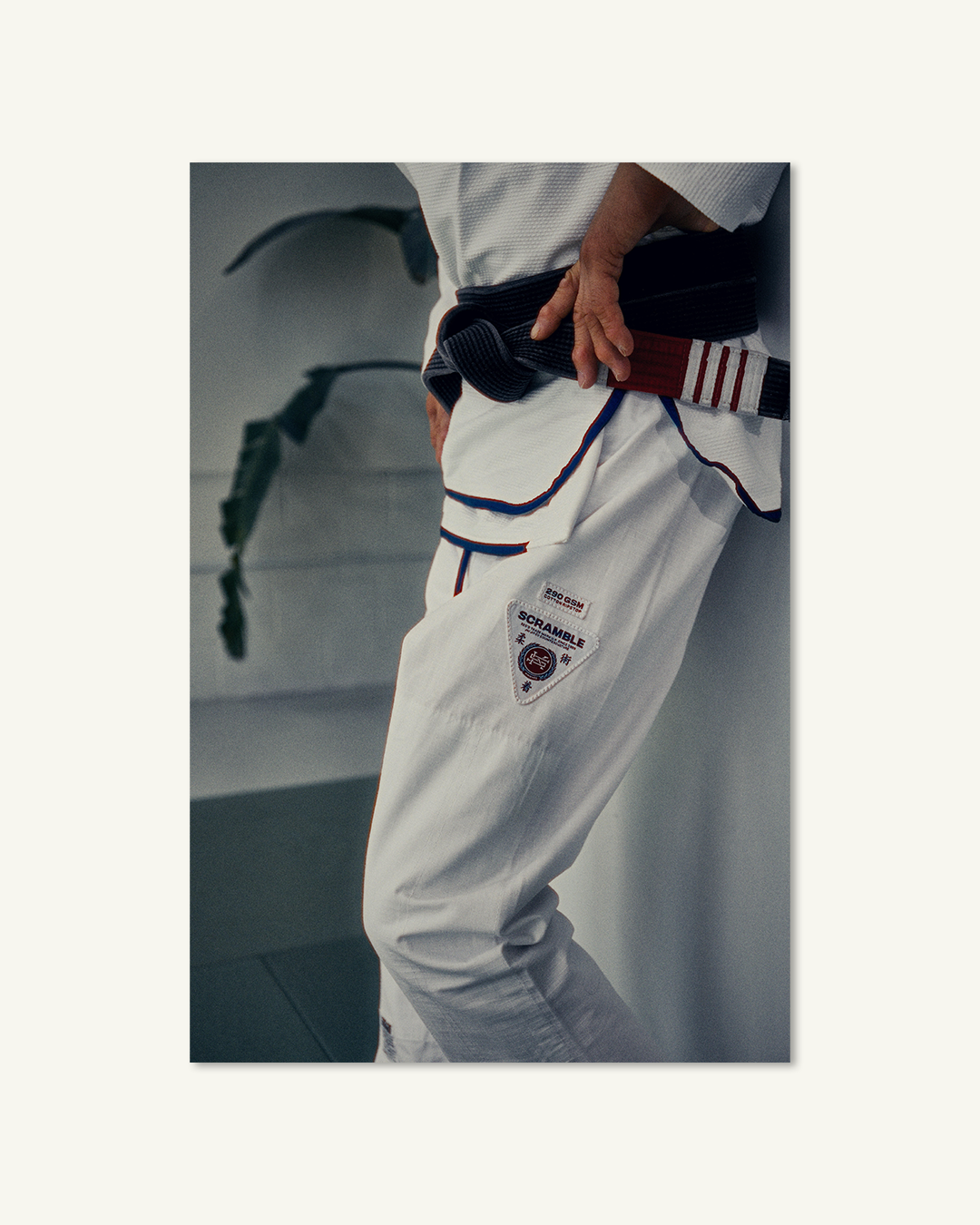
GSM describes the jacket, not the trousers. It is the weight of one square metre of jacket fabric and is the single most useful number when comparing gis. Higher GSM generally means more durable but hotter and slower to dry. Trousers are often measured in a simple “ounce” measurement, or the GSM from the jacket can be carried over. Scramble has recently started to standardise the pants weight measurement – for example, our Fate Gi Navy has 230gsm twill pants.
Pearl weave dominates the modern market for both training and competition because it delivers durability at a lower weight than older gold and double weaves, which have now fallen out of fashion.
Trousers are specced separately and usually lighter, most commonly ripstop or cotton drill / twill
Gi Trousers:
Drill vs twill
Twill is the parent category: any weave where the threads run in diagonal lines (that faint diagonal ribbing you see on denim and chinos). Drill is a specific, heavier, tightly-woven type of twill, usually a hard-wearing 2/1 or 3/1 weave. So all drill is twill, but not all twill is drill. In gi-trouser terms the words are used almost interchangeably by factories: “cotton drill” and “cotton twill” both mean the tough diagonal-weave cotton that most non-ripstop gi pants are cut from. Ripstop is the other option, a lighter plain weave with a reinforcing box grid, and it is a separate thing from drill/twill.
Factory spec GSM (approx) Feel
~7 oz ~230 GSM – Lightweight, like our Fate kimono
8 oz ~270 GSM Light-mid
10 oz ~340 GSM Mid-weight, common gi-pant standard, like our Standard Issue
12 oz ~405 GSM Heavy, rugged
14 oz ~475 GSM Very heavy (and unusual in a gi)
How should you choose a BJJ gi weight and weave?
Match the gi to your climate, training load, goals and budget.
- Beginners: A mid-weight pearl weave gi (around 450 to 550 GSM) is the safest all-round first purchase. Durable, comfortable and versatile.
- Competitors: A lightweight pearl weave jacket (around 350 to 420 GSM) with ripstop trousers helps at weigh-ins and dries quickly between rounds.
- Hot and humid climates: Prioritise lightweight pearl weave or ripstop for breathability and fast drying.
- Cold climates or high durability needs: A heavier pearl weave, with cotton drill or twill pants.
- Training multiple times per week: Own two or three mid-weight gis so each can fully dry between sessions. Rotation extends gi life more than any single fabric choice.
- Budget: A quality mid-weight pearl weave gi offers the best value per year of use. Very cheap gis often use lighter, less durable fabric that wears out faster.
At Scramble we build gis around this logic rather than chasing GSM numbers for their own sake. Founded in the UK in 2009 and led by BJJ black belt Matt Benyon, the brand’s Japanese-influenced, design-led approach is about a gi that feels right, lasts and performs, which usually means a well-constructed pearl weave jacket paired with fabric-appropriate trousers.
Frequently asked questions
What is the best GSM for a BJJ gi? For everyday training, 450 to 550 GSM pearl weave is the most popular all-round choice. For competition, many athletes prefer 350 to 420 GSM to save weight at weigh-ins.
Is pearl weave better than gold weave? For most people, yes. Pearl weave offers a better strength-to-weight ratio, which is why it has largely replaced gold weave as the industry standard.
Do BJJ gis shrink? Yes, cotton gis can shrink, especially with heat. Pre-shrunk or sanforised gis shrink less. Wash cold and air-dry to minimise shrinkage.
Why do competition gis weigh in with the gi on? IBJJF weigh-ins are conducted with the athlete wearing the gi, so a lighter gi leaves more margin under your weight limit.
What is the difference between ripstop and cotton drill trousers? Ripstop is lighter, tear-resistant and quick-drying; cotton drill is a heavier, rugged cotton twill. Both are durable, but ripstop is more popular on modern gis for mobility and drying speed.
